+84 966 814 138
 ceo@trustana.vn
Air - Sea - Rail: Which Shipping Method Is Right for Your Cargo?
Posted on: August 17, 2026Choosing the Right Freight Solution Starts with Understanding Your Cargo
International shipping is no longer just about moving goods from one country to another. For modern supply chains, choosing the right transportation mode directly impacts delivery performance, inventory levels, logistics costs, customer satisfaction, and overall business competitiveness. The three most common international freight solutions are: Air Freight, Sea Freight, and Rail Freight.
Each mode offers distinct advantages depending on the shipment's urgency, cargo characteristics, destination, and budget. Rather than asking "Which shipping method is the best?", businesses should ask: "Which shipping method best matches my cargo and supply chain requirements?"
This guide compares Air, Sea, and Rail Freight to help exporters, manufacturers, and importers make better logistics decisions.
1. Air Freight: When Speed Is the Highest Priority
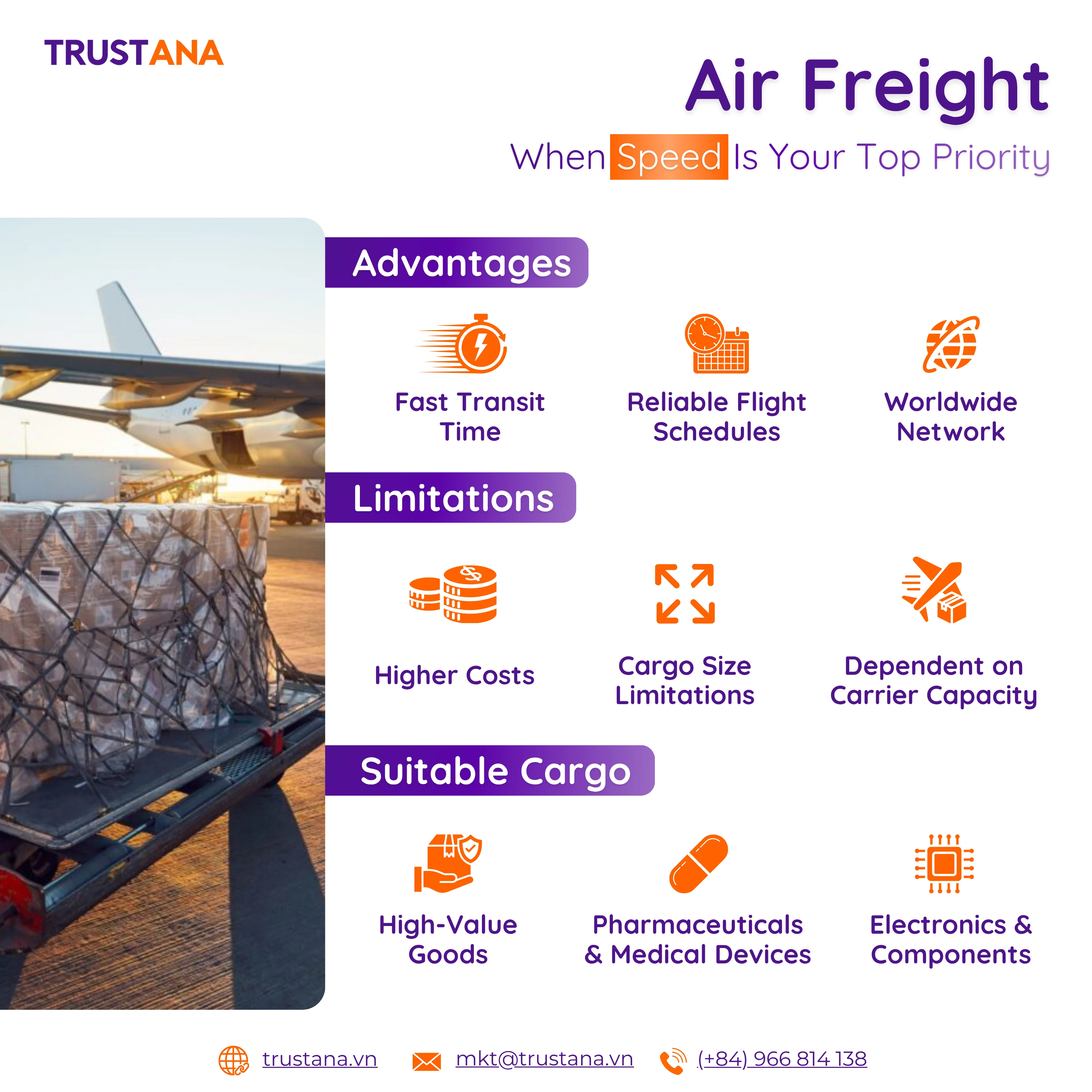
Air Freight is the fastest method of transporting goods internationally. It is widely used for shipments where delivery time is more valuable than transportation cost. For industries operating with tight production schedules or high-value products, reducing transit time can significantly lower inventory costs and minimize supply chain disruptions.
Advantages
- Fastest Transit Time: Air Freight dramatically reduces international shipping time compared with sea or rail transport.
- Reliable Flight Schedules: Commercial cargo airlines operate frequent international flights, allowing businesses to plan shipments with greater confidence.
- Global Connectivity: Air cargo networks connect almost every major manufacturing and commercial hub worldwide, enabling rapid access to international markets.
Limitations
- Higher Transportation Cost: Air Freight generally has the highest shipping cost per kilogram due to aircraft operating costs and limited cargo capacity.
- Cargo Restrictions: Aircraft have strict limitations regarding weight, dimensions, and aircraft capacity limitations...Some products may require specialized approvals or dedicated charter solutions.
- Capacity Fluctuations: Available cargo space can change depending on passenger flight schedules, peak seasons, and market demand.
Best Suited For
- Electronics and semiconductor components
- Pharmaceuticals and medical equipment
- High-value products
- Samples and prototypes
- Urgent replacement parts
- Time-Critical Logistics
2. Sea Freight: The Most Cost-Effective Solution for Large Shipments
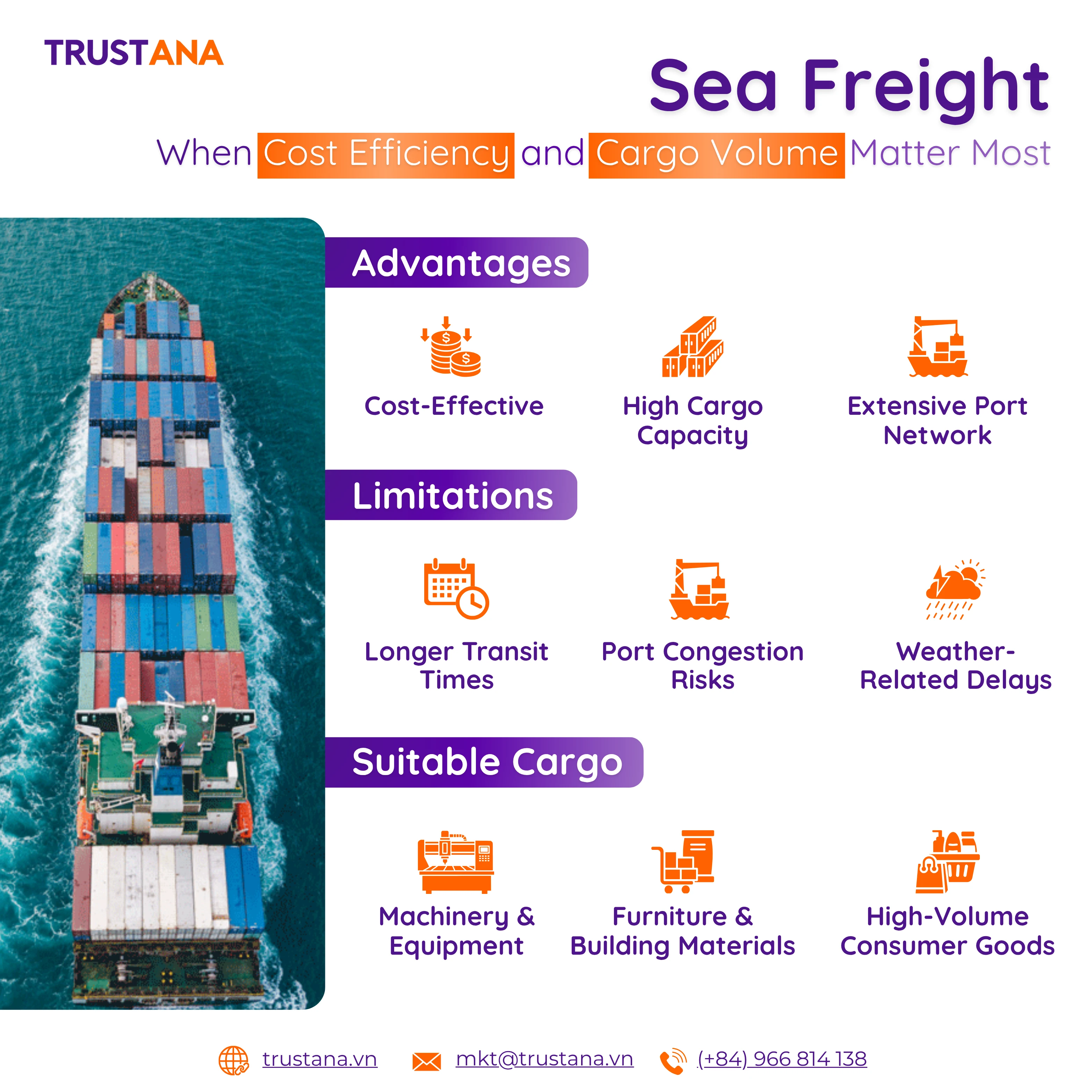
Sea Freight remains the backbone of global trade, carrying the majority of international cargo worldwide. It offers unmatched cargo capacity and the lowest transportation cost for large-volume shipments. When delivery speed is less critical, ocean freight becomes the most economical choice.
Advantages
- Lowest Shipping Cost: Ocean transport typically offers the most competitive cost per unit or per container, making it highly suitable for bulk shipments.
- Massive Cargo Capacity: Container vessels can transport thousands of containers in a single voyage.Sea Freight also supports: Oversized cargo, Heavy equipment, Industrial machinery, Project cargo, Bulk commodities...
- Extensive Global Port Network: With thousands of commercial ports worldwide, Sea Freight connects virtually every international trading market.
Limitations
- Long Transit Times: Ocean transportation generally requires significantly more transit time than Air or Rail Freight. Companies must therefore plan production and inventory carefully.
- Port Congestion Risks: Delays may occur due to port congestion, vessel schedule changes, customs inspections, and terminal operations.
- Weather Impact: Ocean shipping can be affected by tropical storms, typhoons, rough sea conditions, and seasonal weather disruptions. Although vessels are designed for adverse conditions, severe weather may delay departures or arrivals.
Best Suited For
- Industrial machinery
- Construction materials
- Furniture
- Consumer goods
- Bulk cargo
3. Rail Freight: The Balance Between Cost and Transit Time
Rail Freight has become an increasingly attractive option for international cargo moving between Asia and Europe. It offers a practical middle ground between Air Freight and Sea Freight by combining competitive transit times with moderate transportation costs.
For many manufacturers, Rail Freight provides the optimal balance between speed, reliability, and budget.
Advantages
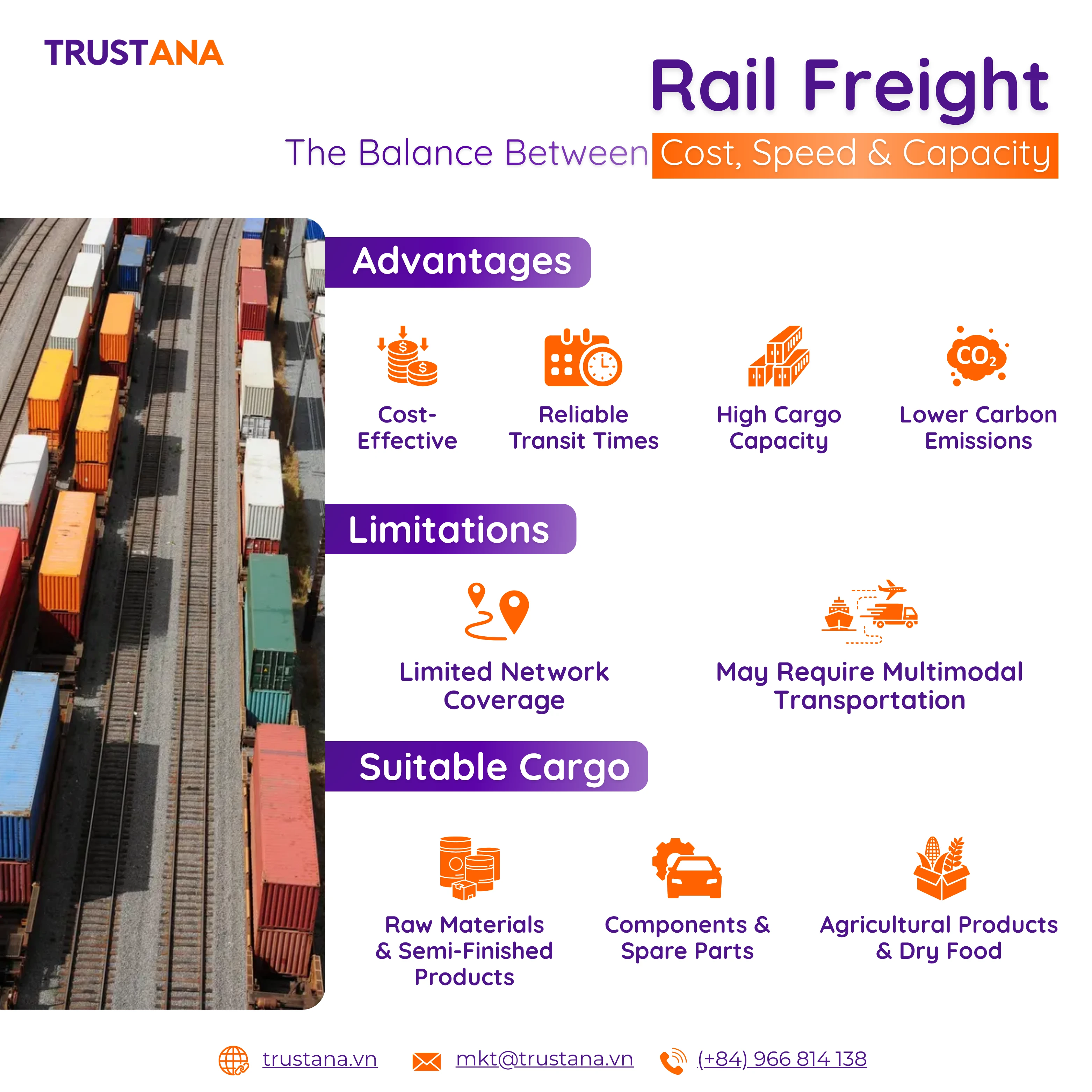
- Competitive Transportation Cost: Rail Freight is generally less expensive than Air Freight while providing faster transit than traditional ocean shipping.
- Stable Transit Time: Unlike maritime transport, rail services are less affected by port congestion and many weather-related disruptions. This makes transit schedules relatively predictable.
- Suitable for Large Cargo Volumes: Rail transport supports both Full Container Load (FCL) and Less than Container Load (LCL) shipments while handling substantial cargo volumes.
- Lower Carbon Emissions: Compared with air transportation, rail produces significantly lower greenhouse gas emissions, making it a more sustainable logistics option. As ESG initiatives become increasingly important, many companies are incorporating rail into their supply chain strategies.
Limitations
- Limited Geographic Coverage: Rail Freight is only available along established railway corridors. Additional trucking is often required for first-mile and last-mile delivery.
- Intermodal Transportation: International rail shipments usually involve multiple transport modes, including road transportation before and after rail movement. This requires coordinated logistics planning.
Best Suited For
- Raw materials
- Industrial components
- Automotive parts
- Machinery components
- Semi-finished products
- Dry agricultural products
4. Air, Sea, or Rail: Which One Should You Choose?
The right shipping method depends on several key factors:
- Delivery deadline
- Cargo value
- Shipment size and weight
- Transportation budget
- Destination country
- Production schedule
- Inventory strategy
A shipment that requires immediate delivery may justify Air Freight.
A large-volume export may benefit from Sea Freight.
A manufacturer looking to balance cost and transit time between Asia and Europe may find Rail Freight to be the most efficient solution.
Understanding these trade-offs allows businesses to optimize logistics performance while controlling transportation costs.
5. Trustana Provides Tailored International Freight Solutions
At Trustana, we understand that every shipment has different priorities. Our logistics specialists help customers identify the most suitable transportation solution based on cargo type, urgency, destination, and supply chain objectives.
Our services include:
- International Air, Sea, and Rail Freight
- Customs Clearance
- Inland Transportation
- End-to-End Logistics Solutions
Whether your priority is speed, cost efficiency, or supply chain reliability, Trustana works with you to design a logistics solution that supports your business goals.
Need help choosing the right freight solution? Contact Trustana today for professional logistics consultation tailored to your cargo.
--
🇻🇳 Trustana Logistics | mkt@trustana.vn
✈️ 24/7/365 Help Desk: aog@trustana.vn | (+84) 966 814 138
Project
Why More Businesses Are Choosing Rail Freight for Exports
Project
Next Flight Out from Vietnam to Seattle | Time-Critical Shipment for Aerospace Industry
Project
Aerospace Logistics: Why Can a Small Mistake in Aerospace Logistics Cost Millions of Dollars?
Project