+84 966 814 138
 ceo@trustana.vn
Aerospace Logistics: Why Can a Small Mistake in Aerospace Logistics Cost Millions of Dollars?
Posted on: June 9, 2026In the aerospace industry, the value of a shipment extends far beyond the component itself. What truly matters is the role that component plays within the broader operational and production ecosystem.
A delayed aircraft engine, a maintenance part held by customs, or an avionics unit damaged during transit can trigger a chain reaction of disruptions, including:
- Aircraft maintenance delays
- Production interruptions
- Reduced fleet availability
- Significant financial and reputational losses
This is why Aerospace Logistics is widely regarded as one of the most demanding and specialized sectors within the logistics industry.
Documentation Is More Than Just Paperwork
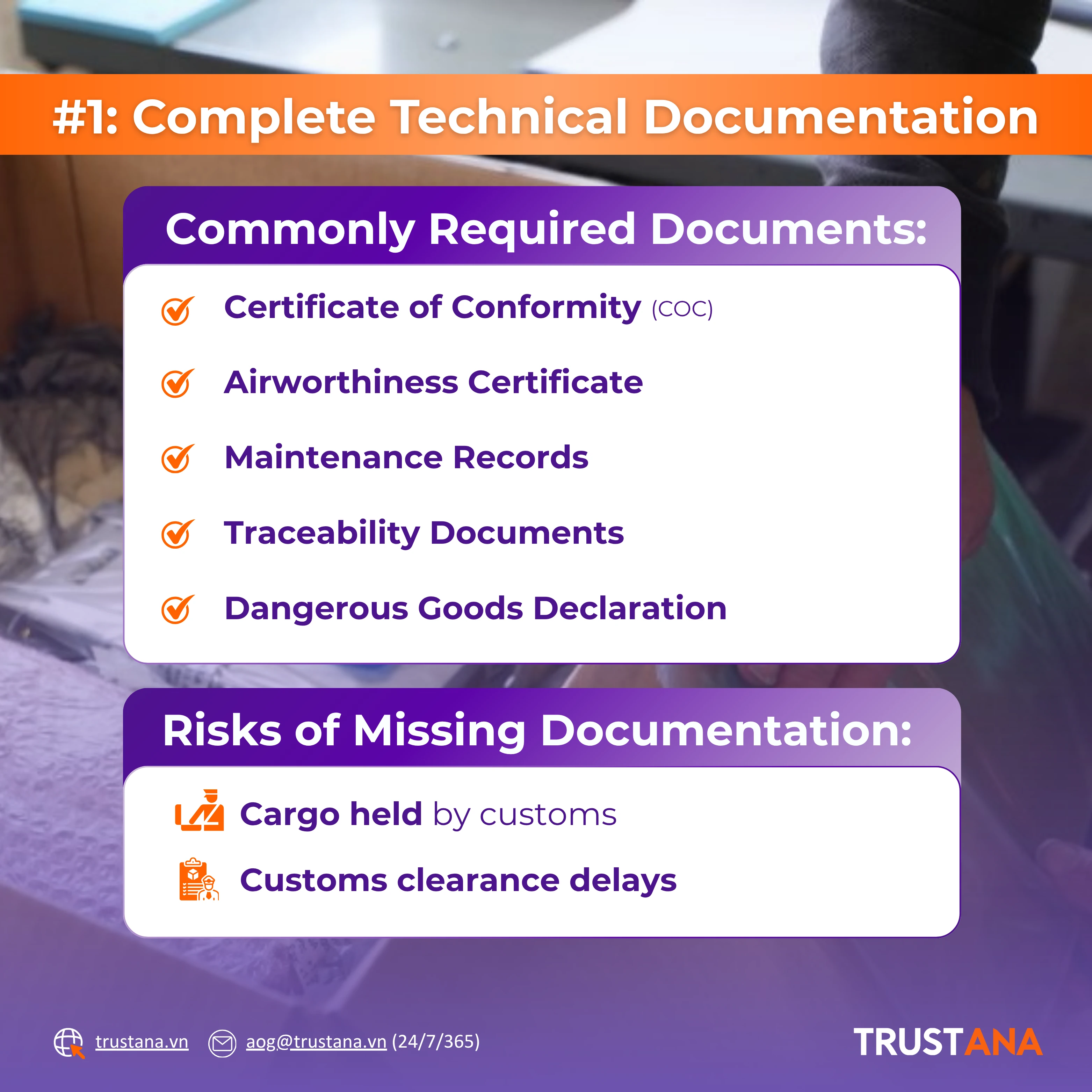
Unlike conventional cargo, aircraft parts and aerospace equipment are subject to strict requirements regarding traceability, regulatory compliance, and airworthiness.
Depending on the shipment, required documentation may include:
- Certificate of Conformity (CoC)
- Airworthiness Certificate (FAA/EASA)
- Import and Export Licenses
- Dangerous Goods Declaration (if applicable)
- Maintenance and Traceability Records
Missing, inaccurate, or incomplete documentation can result in:
- Customs holds
- Clearance delays
- Regulatory issues
- Rejection of components for installation or operation
In Aerospace Logistics, getting the paperwork right from the beginning is often just as important as the transportation itself.
Not All Aircraft Components Are Transported the Same Way
One of the most common misconceptions in logistics is treating aerospace components as standard cargo.
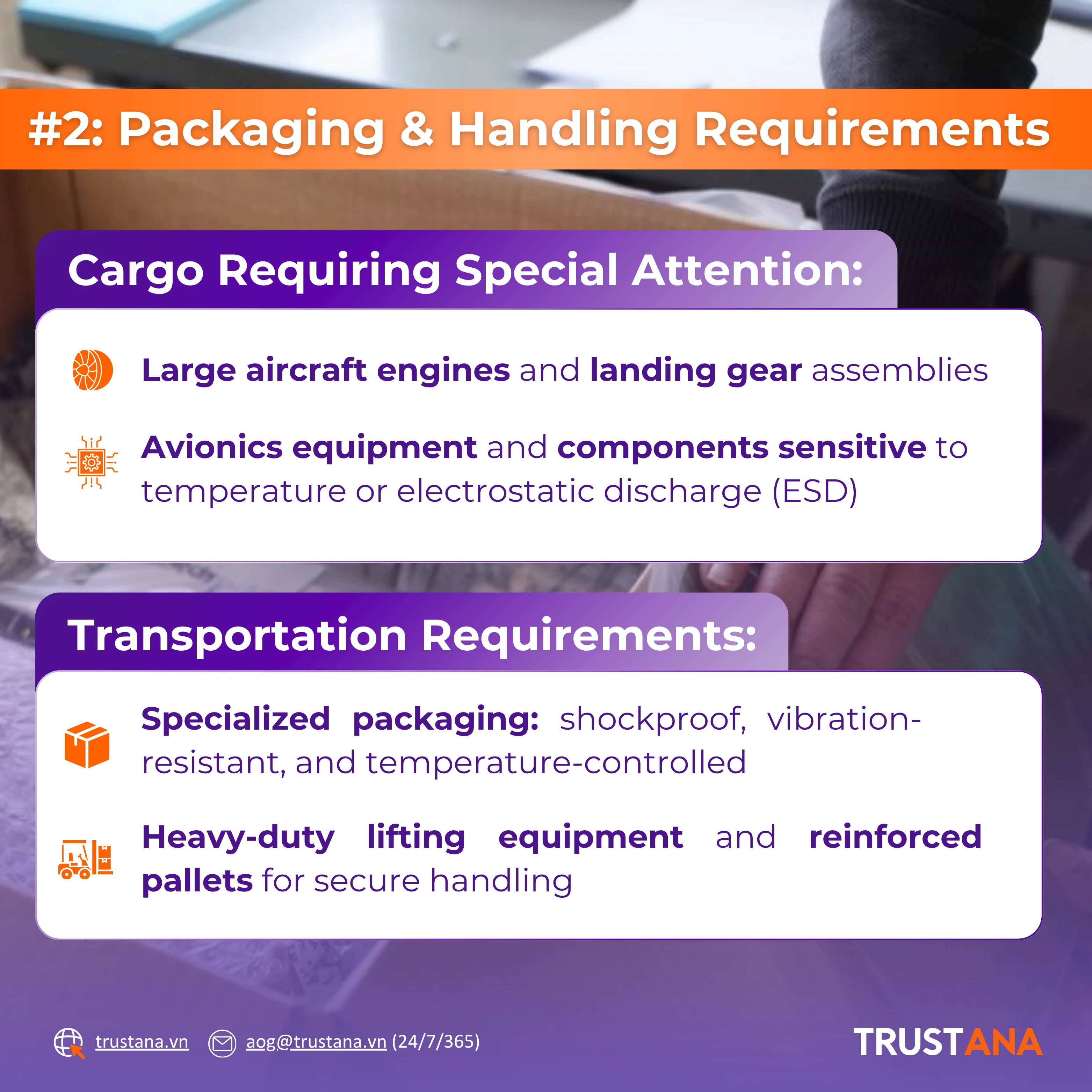
Many aerospace items require highly specialized handling, including:
- Aircraft Engines
- Landing Gear Systems
- Avionics Equipment
- Composite Structures
- High-Precision Aerospace Components
These shipments often require:
- Dedicated aerospace pallets
- Custom-built transportation racks
- Shock and vibration protection systems
- Humidity-controlled packaging
- Temperature-controlled transportation environments
Selecting the wrong packaging or handling solution can compromise component integrity, resulting in operational delays, costly replacements, and potential safety concerns.
When Time Is Critical
While a standard commercial shipment may tolerate a delay of several days, aerospace operations rarely have that luxury.
A delayed spare part can:
- Disrupt scheduled maintenance activities
- Delay aircraft assembly operations
- Reduce fleet availability
- Affect flight schedules and operational performance
As a result, many aerospace shipments are handled through specialized Time-Critical Logistics solutions, including:
- Time-Critical Air Freight
- Next Flight Out (NFO)
- On-Board Courier (OBC)
- Aircraft on Ground (AOG) Logistics
In AOG situations, the responsiveness of the logistics provider often determines how quickly an airline or MRO can restore operations and minimize downtime.
Dangerous Goods in Aerospace Logistics
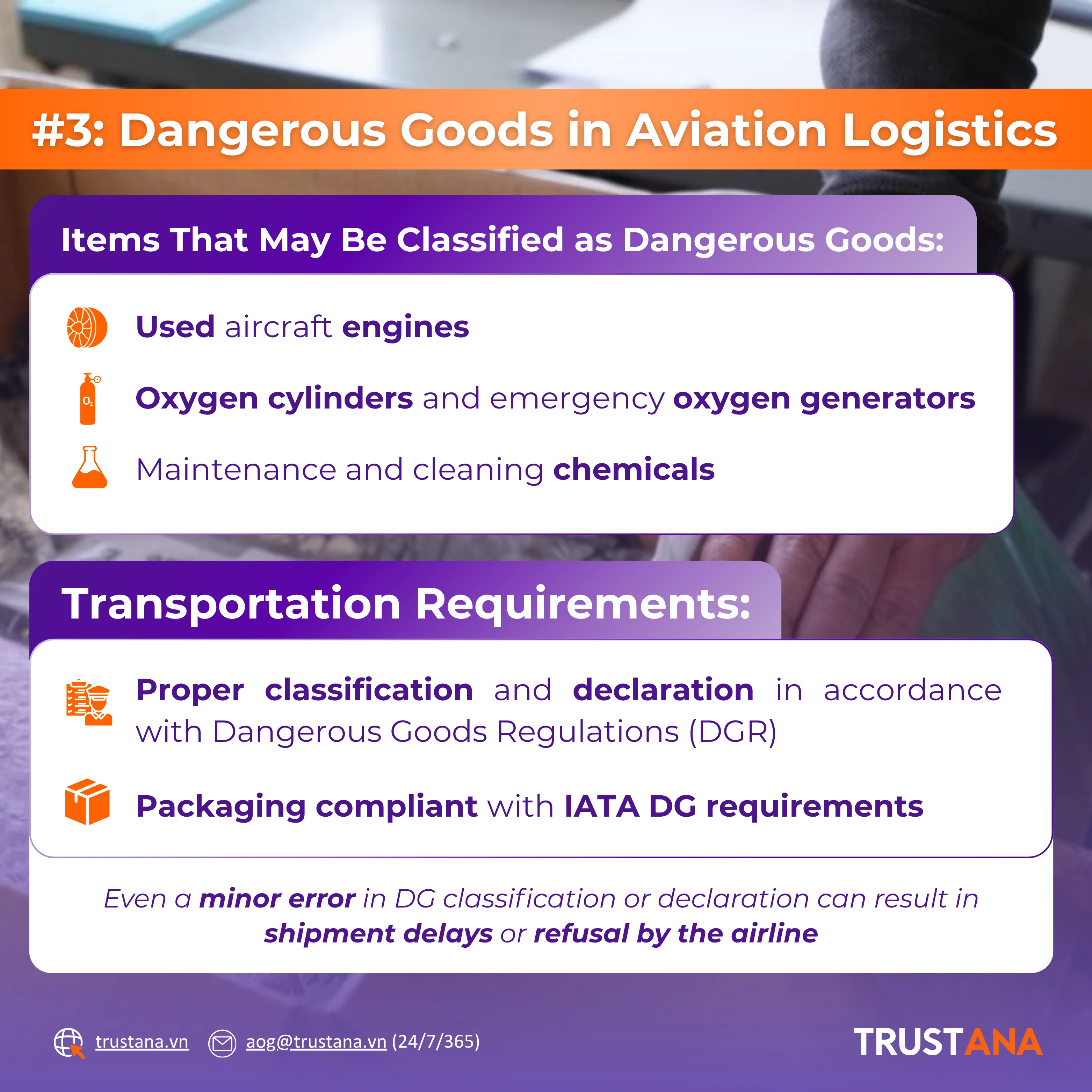
Not every aerospace shipment is classified as Dangerous Goods (DG), but many components fall under highly regulated categories.
Common examples include:
- Lithium Batteries
- Oxygen Cylinders and Emergency Oxygen Generators
- Maintenance Chemicals
- Pressurized Equipment
- Used Engines Containing Residual Fuel
These shipments require:
- Accurate classification
- Compliant packaging
- Proper labeling
- Correct documentation
- Adherence to international regulations
Even a minor error in classification or declaration can result in shipment rejection, transportation delays, regulatory penalties, or additional inspections.
Aerospace Logistics Is Risk Management, Not Just Transportation
The global aerospace supply chain continues to face significant challenges, including:
- Component shortages
- Record aircraft order backlogs
Extended production lead times
- Increasing pressure to maintain operational continuity
In this environment, logistics is no longer simply about moving cargo from one location to another.
It has become a critical risk management function that helps aerospace companies:
- Protect production schedules
- Reduce operational disruptions
- Maintain fleet readiness
- Improve supply chain resilience
- Ensure business continuity
Choosing the right logistics partner can have a direct impact on an organization's ability to respond to disruptions and maintain operational performance.
Specialized Aerospace Logistics Solutions from Trustana
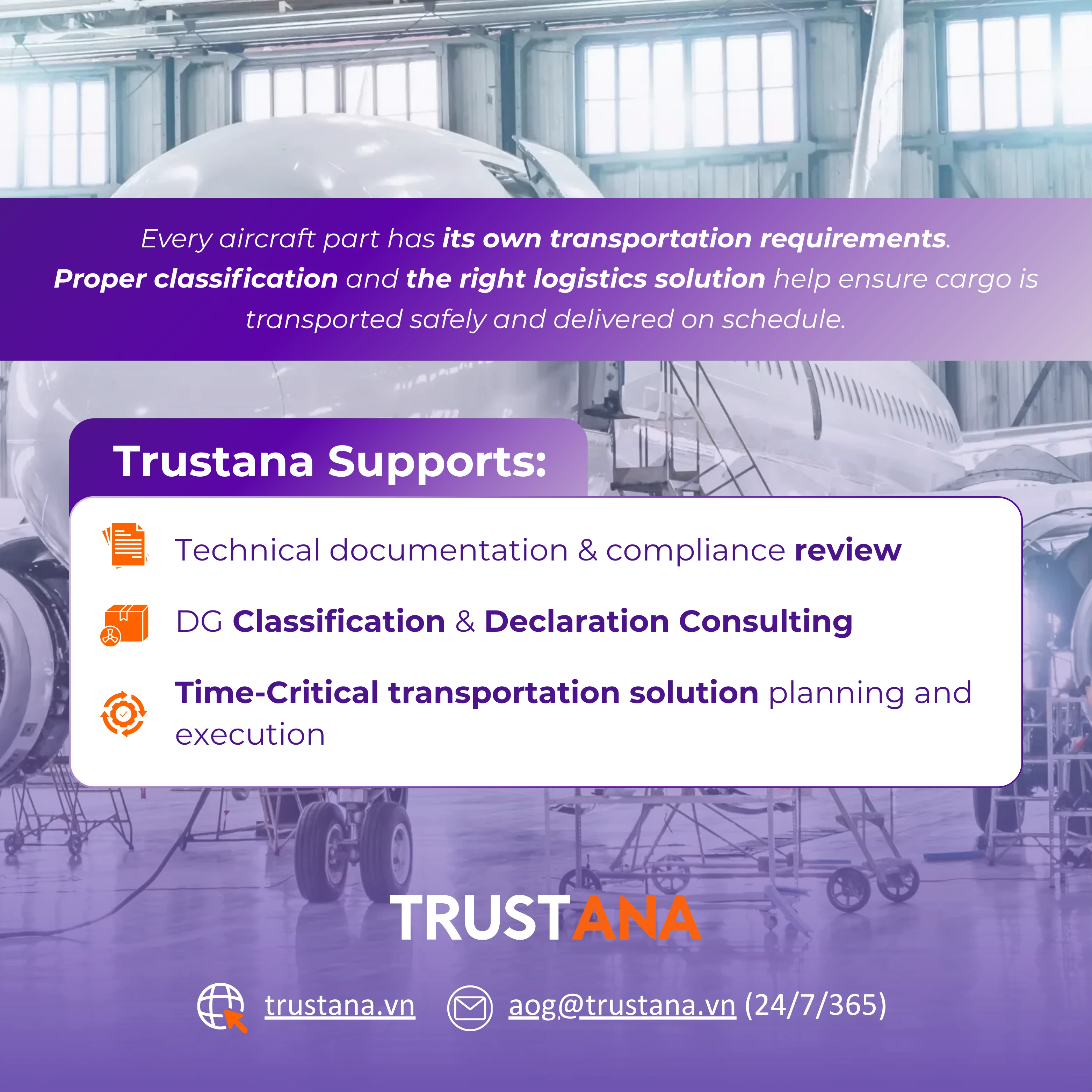
At Trustana, we support aerospace customers with specialized logistics solutions designed for high-value, time-sensitive, and mission-critical shipments.
Our capabilities include:
✈️ Time-Critical Logistics
✈️ Aircraft on Ground (AOG) Shipments
✈️ On-Board Courier (OBC)
✈️ Dangerous Goods (DG) Handling
✈️ Air Freight & Specialized Transportation Solutions
With extensive experience handling sensitive aerospace cargo, Trustana helps customers minimize operational risks, protect critical timelines, and keep supply chains moving.
Need Support for Aerospace, AOG, or Time-Critical Shipments?
Contact Trustana to discuss your aerospace logistics requirements and discover solutions tailored to your operational needs.
✈️ 24/7/365 Help Desk: aog@trustana.vn
📱 WhatsApp: (+84) 793 348 001
Project
OBC vs NFO: Which Time-Critical Logistics Solution Is Right for Your Shipment?
Project
Next Flight Out from Vietnam to Seattle | Time-Critical Shipment for Aerospace Industry
Project
Strategic Case Study: The Ho Chi Minh City to Mexico City Time-Critical Logistics Corridor
Project