+84 966 814 138
 ceo@trustana.vn
OBC vs NFO: Which Time-Critical Logistics Solution Is Right for Your Shipment?
Posted on: June 24, 2026OBC vs NFO: Which Time-Critical Logistics Solution Is Right for Your Shipment?
In today's global supply chains, urgent shipments are no longer limited to spare parts and emergency deliveries. Critical cargo now supports aircraft maintenance, manufacturing operations, clinical trials, medical equipment distribution, and high-value projects where delays can have significant operational and financial consequences.
When every hour matters, businesses often turn to two specialized Time-Critical Logistics solutions: On Board Courier (OBC) and Next Flight Out (NFO).
While both services are designed to move shipments as quickly as possible, they differ significantly in terms of handling, visibility, customs clearance, flexibility, and overall risk management.
Understanding these differences can help businesses choose the most effective solution for their operational requirements.
What Is the Difference Between OBC and NFO?
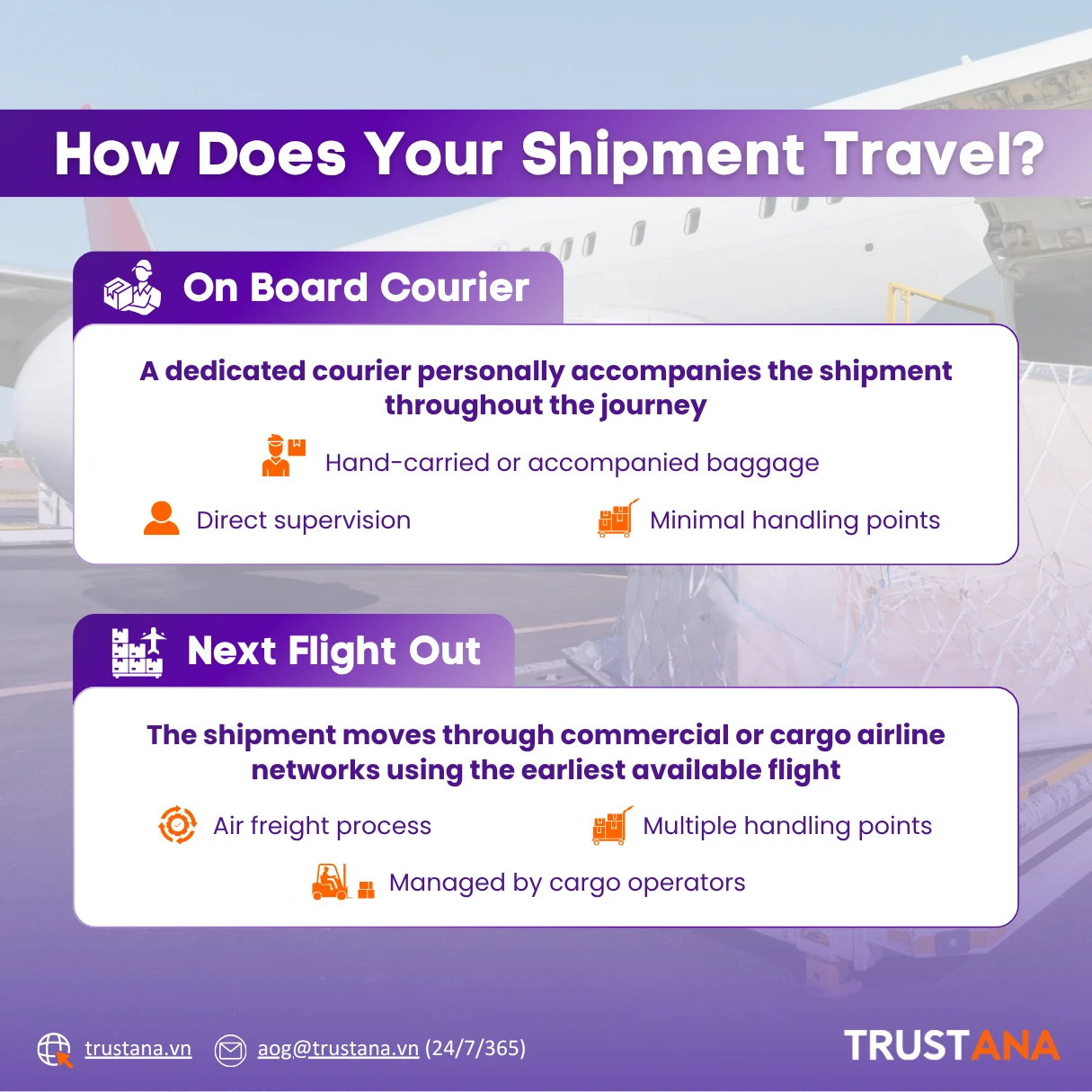
At first glance, both OBC and NFO aim to deliver urgent shipments as fast as possible. However, the way each solution operates is fundamentally different.
On Board Courier (OBC)
An On Board Courier service involves a dedicated courier personally accompanying the shipment throughout the entire journey.
The courier manages:
- Shipment collection
- Airport handling
- Flight connections
- Customs procedures
- Final handover to the consignee
Because the shipment remains under direct supervision, OBC provides maximum control and visibility from pickup to delivery.
Next Flight Out (NFO)
Next Flight Out utilizes the earliest available commercial or cargo flight to move shipments through established air freight networks.
The shipment travels as cargo and follows standard airline and airport handling procedures, including cargo acceptance, ground handling, customs processing, and final delivery.
NFO provides fast and reliable transportation while leveraging existing airline infrastructure.
The primary difference is not speed alone - it is the level of oversight throughout the journey.
When Every Hour Matters
For many urgent shipments, a delay of several hours may be manageable.
However, certain industries operate under conditions where even a short delay can result in major disruptions.
Examples include:
- Aircraft on Ground (AOG) situations
- Critical MRO components
- Production line stoppages
- Clinical trial materials
- High-value prototypes
- Emergency medical equipment
In these scenarios, transit time is measured in hours rather than days.
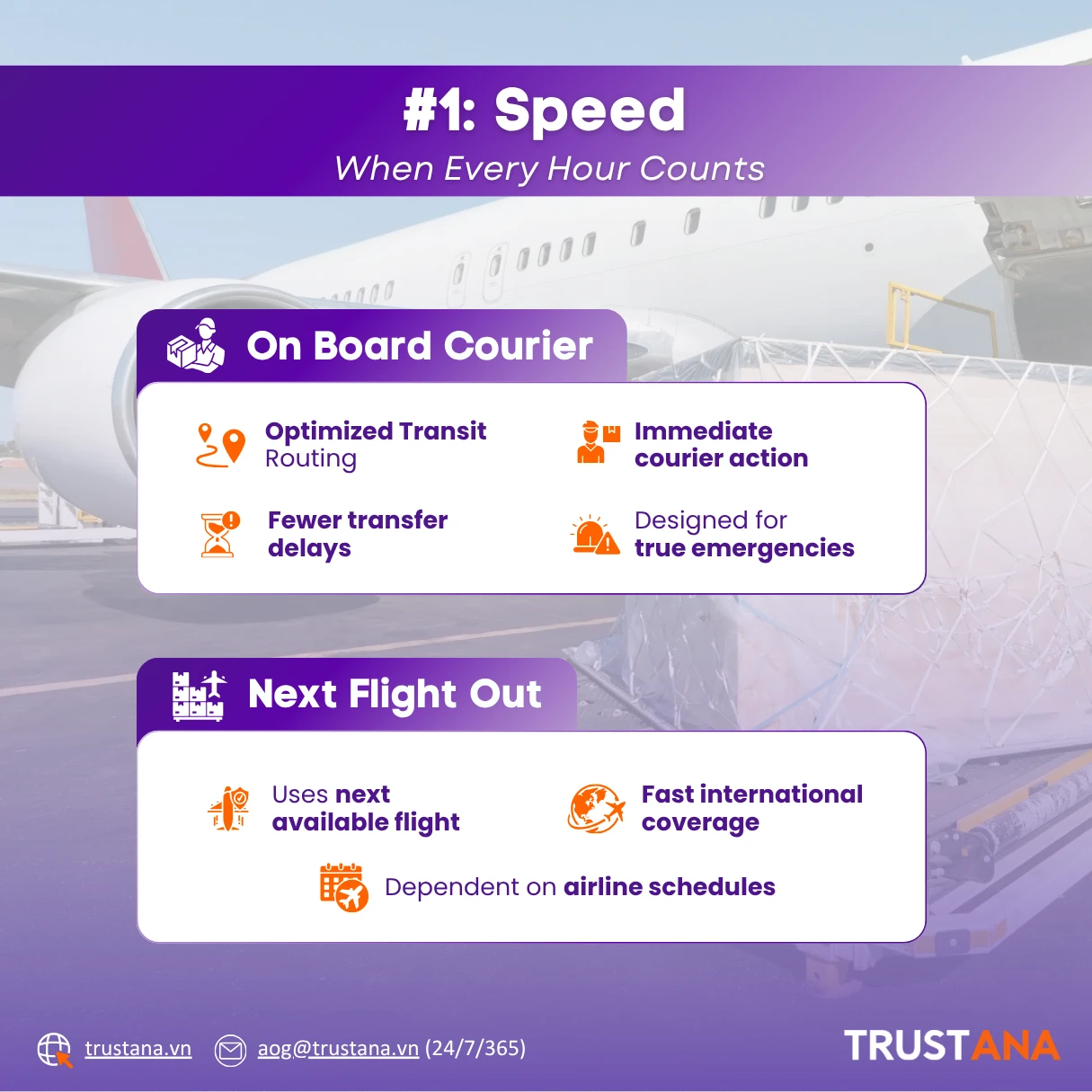
Because OBC shipments remain under direct courier supervision, routing decisions can often be optimized in real time while reducing delays associated with conventional cargo handling.
NFO remains an excellent option for urgent cargo, but the shipment is still dependent on:
- Airline schedules
- Cargo acceptance cut-off times
- Airport handling processes
- Ground handling operations
For mission-critical shipments, these additional touchpoints can sometimes introduce unwanted delays.
Security and Risk Management
Every additional handling point creates an opportunity for delay, damage, or disruption.
For high-value or irreplaceable cargo, minimizing these risks is often just as important as minimizing transit time.
OBC Security Advantages
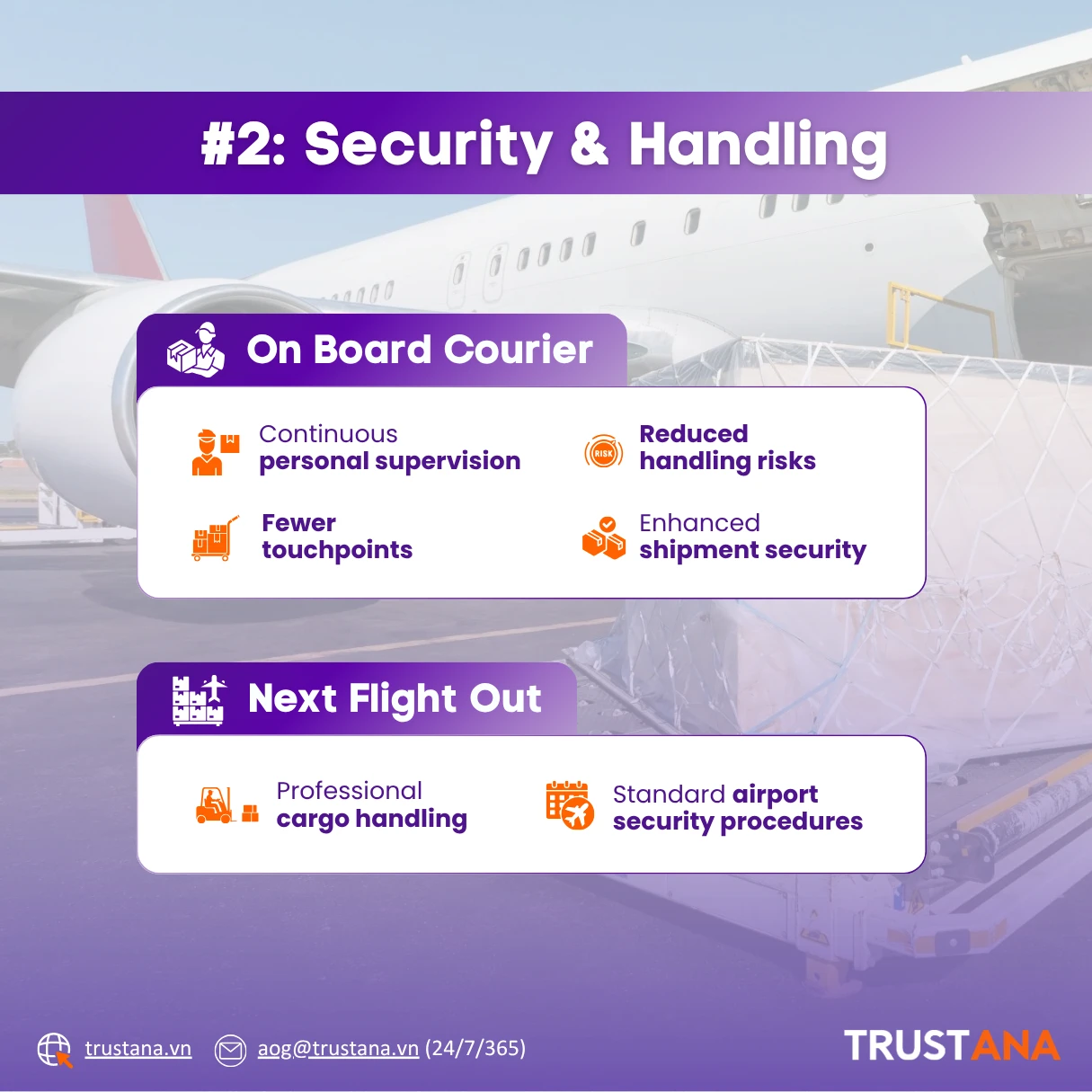
Because OBC shipments remain under direct supervision throughout the journey, they typically experience fewer handling touchpoints.
This makes OBC particularly suitable for:
- Aerospace components
- Automotive parts
- Clinical trial materials
- Medical devices
- High-value electronics
- Confidential documents
The reduced number of transfers helps minimize operational risk and improve shipment security.
NFO Security Advantages
NFO shipments follow professional cargo handling procedures and benefit from established airline cargo infrastructure.
This makes NFO an effective solution for:
- Urgent commercial cargo
- Industrial spare parts
- Manufacturing materials
- Time-sensitive shipments requiring fast delivery
While not personally accompanied, shipments are still managed according to strict airline handling standards.
Customs Clearance: A Critical but Often Overlooked Factor
Many businesses focus primarily on flight schedules when evaluating urgent transportation solutions.
However, customs clearance can have a significant impact on overall door-to-door transit time.
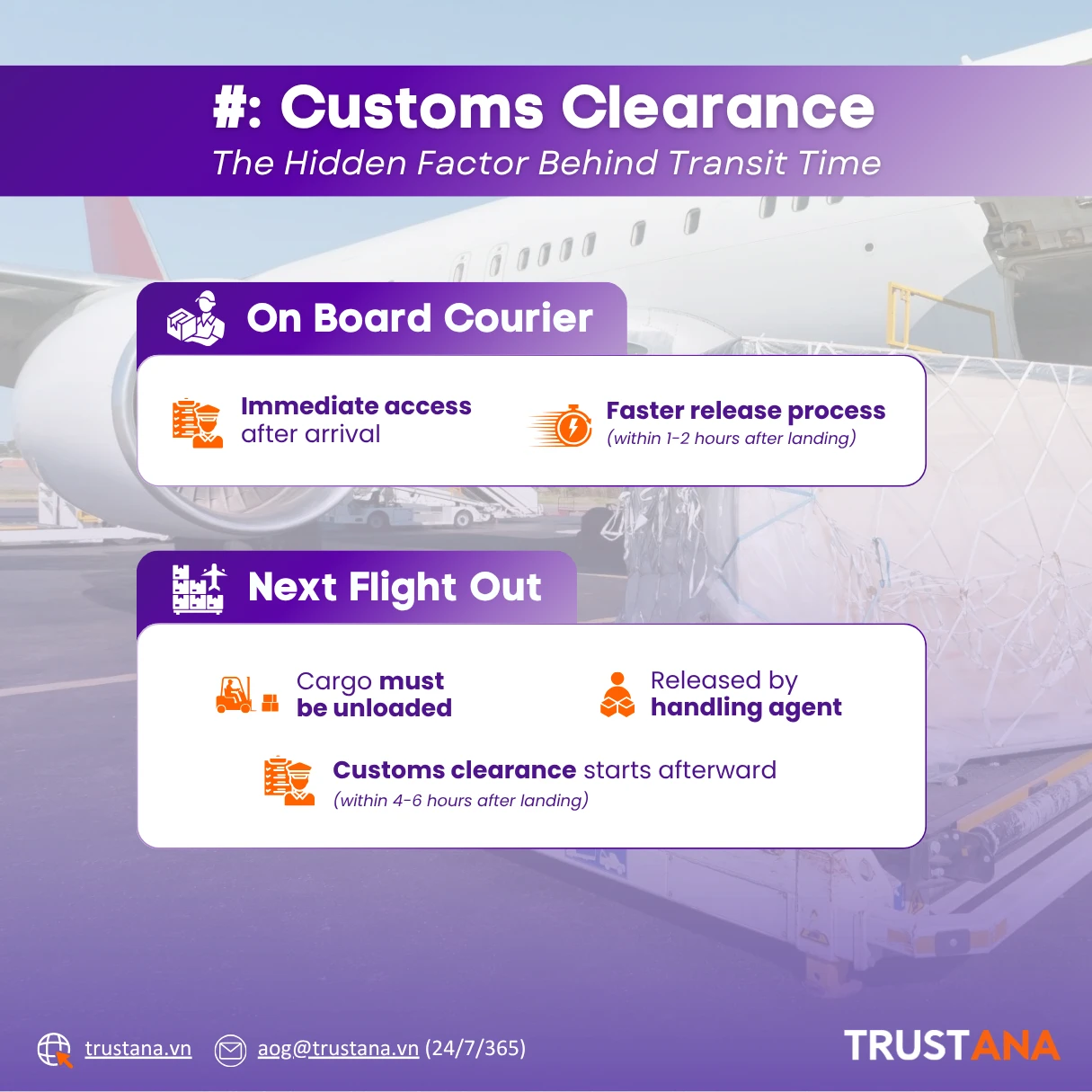
Customs Clearance with NFO
For NFO shipments, cargo typically goes through several stages after landing:
- Aircraft unloading
- Transfer to the cargo terminal
- Ground handling processing
- Cargo release procedures
- Customs clearance
- Final delivery
Depending on airport congestion, operating hours, and local regulations, this process can take several hours or longer.
Customs Clearance with OBC
With OBC, the courier travels alongside the shipment as carry-on or accompanied baggage.
This often allows customs procedures to begin immediately after arrival.
In many destinations, shipments can typically be cleared within approximately 1-2 hours after landing, subject to local regulations.
For businesses operating under strict timelines, this customs advantage can be a decisive factor when selecting a logistics solution.
Shipment Visibility and Tracking
Visibility is increasingly important in Time-Critical Logistics.
Knowing exactly where a shipment is at every stage helps businesses make informed operational decisions and reduce uncertainty.
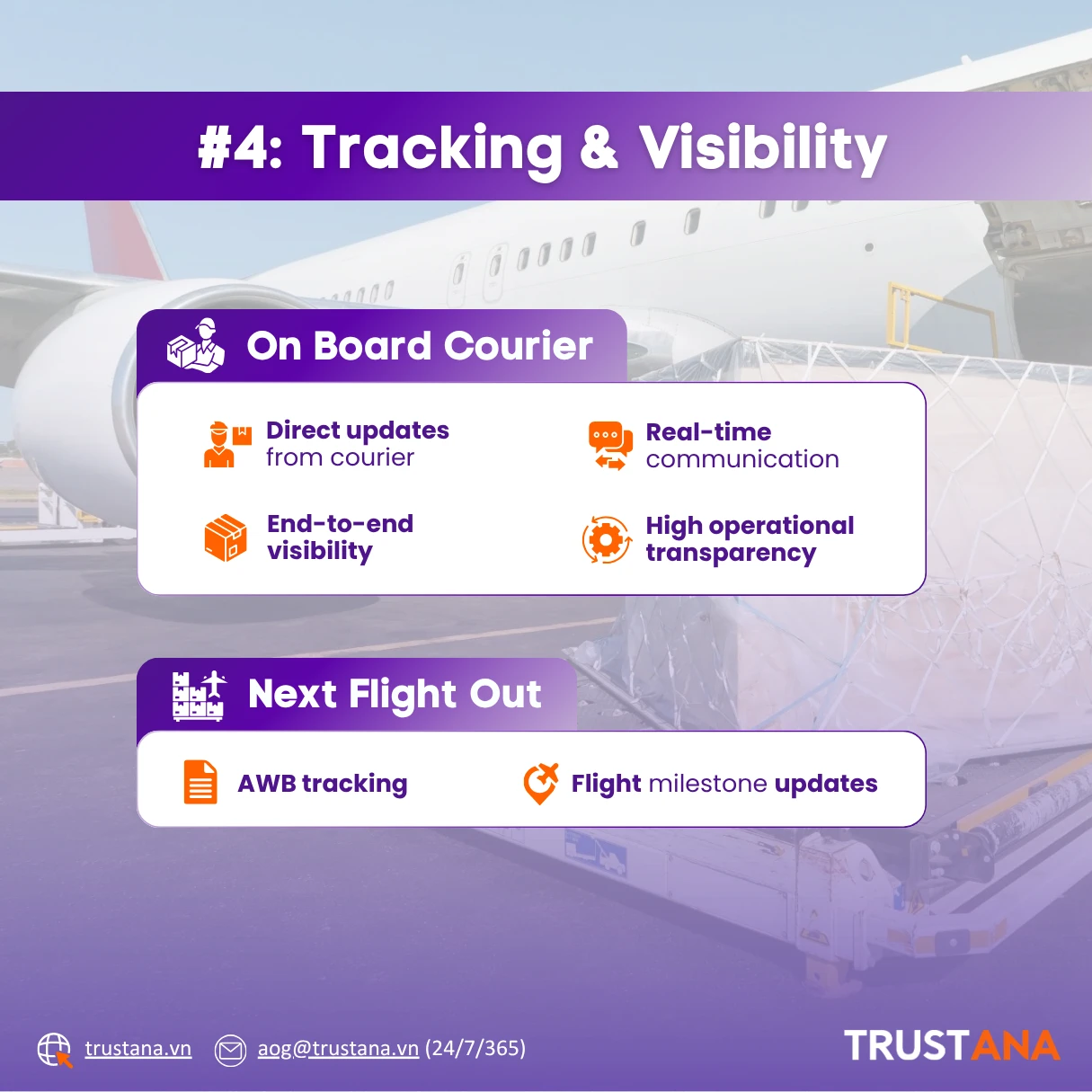
OBC Visibility
OBC provides a high level of shipment transparency.
Throughout the journey, operations teams receive direct updates from the courier, including:
- Flight status
- Transit progress
- Customs activities
- Final delivery confirmation
This real-time communication provides confidence and reassurance for mission-critical shipments.
NFO Visibility
NFO shipments are typically tracked using:
- Air Waybill (AWB) information
- Airline milestone updates
- Cargo tracking systems
While highly reliable, tracking visibility is generally limited to standard cargo events rather than direct shipment supervision.
For many urgent shipments, this level of visibility is sufficient.
For highly sensitive cargo, businesses often prefer the enhanced oversight provided by OBC.
Cost vs Operational Impact
One of the most common mistakes when comparing OBC and NFO is focusing solely on transportation cost.
A more relevant question is:
What is the cost of delay?
For example:
- How much does one day of aircraft downtime cost?
- What is the impact of stopping a production line?
- How much revenue could be lost due to a delayed clinical trial?
In many situations, the operational consequences of waiting far exceed the premium associated with OBC services.
For shipments where timing is important but the business impact of delay is lower, NFO often provides the best balance between speed and cost efficiency.
When Should You Choose OBC?
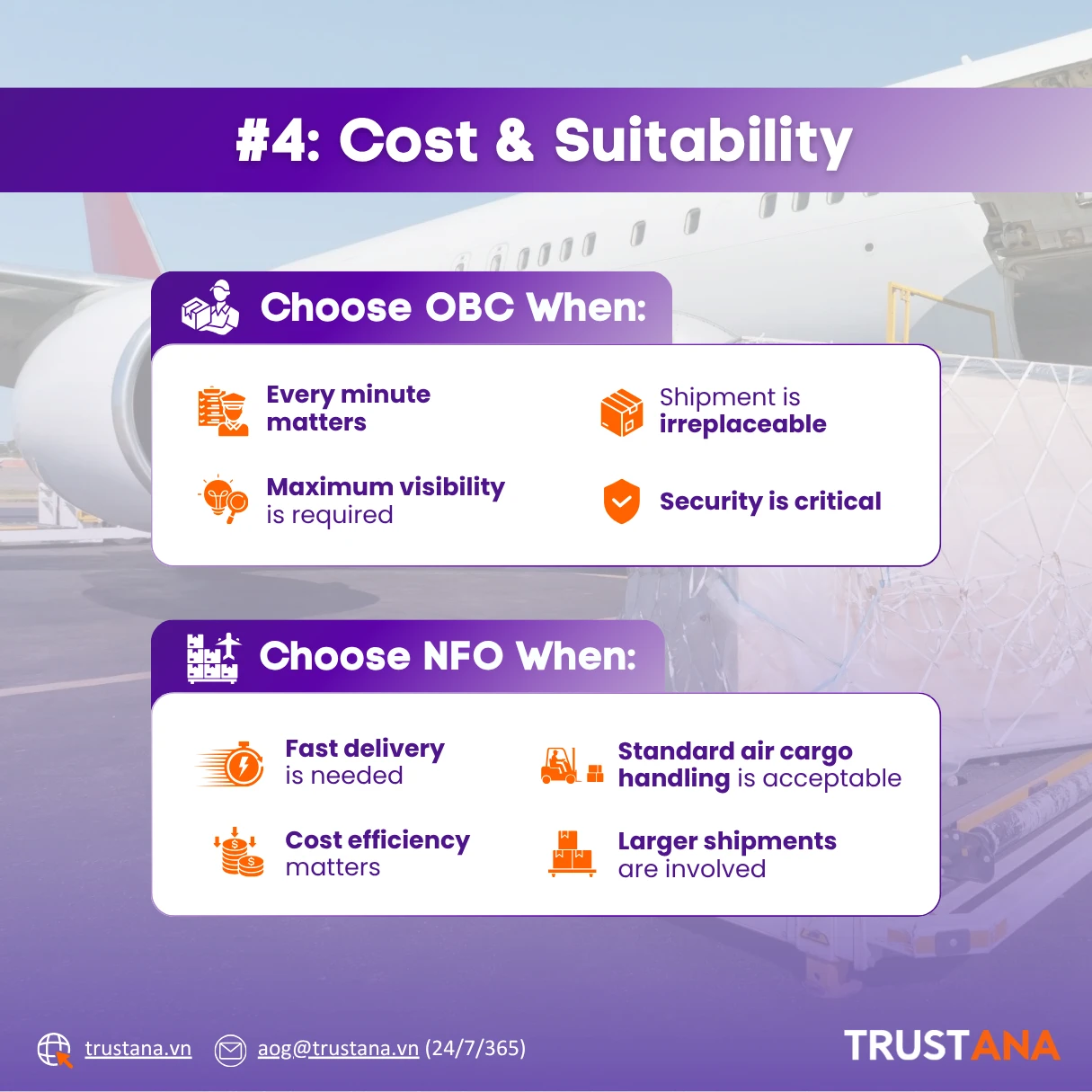
OBC is often the preferred solution when:
- Every hour matters
- The shipment is irreplaceable
- Maximum visibility is required
- Direct supervision is essential
- Operational disruption would be costly
- Customs clearance speed is critical
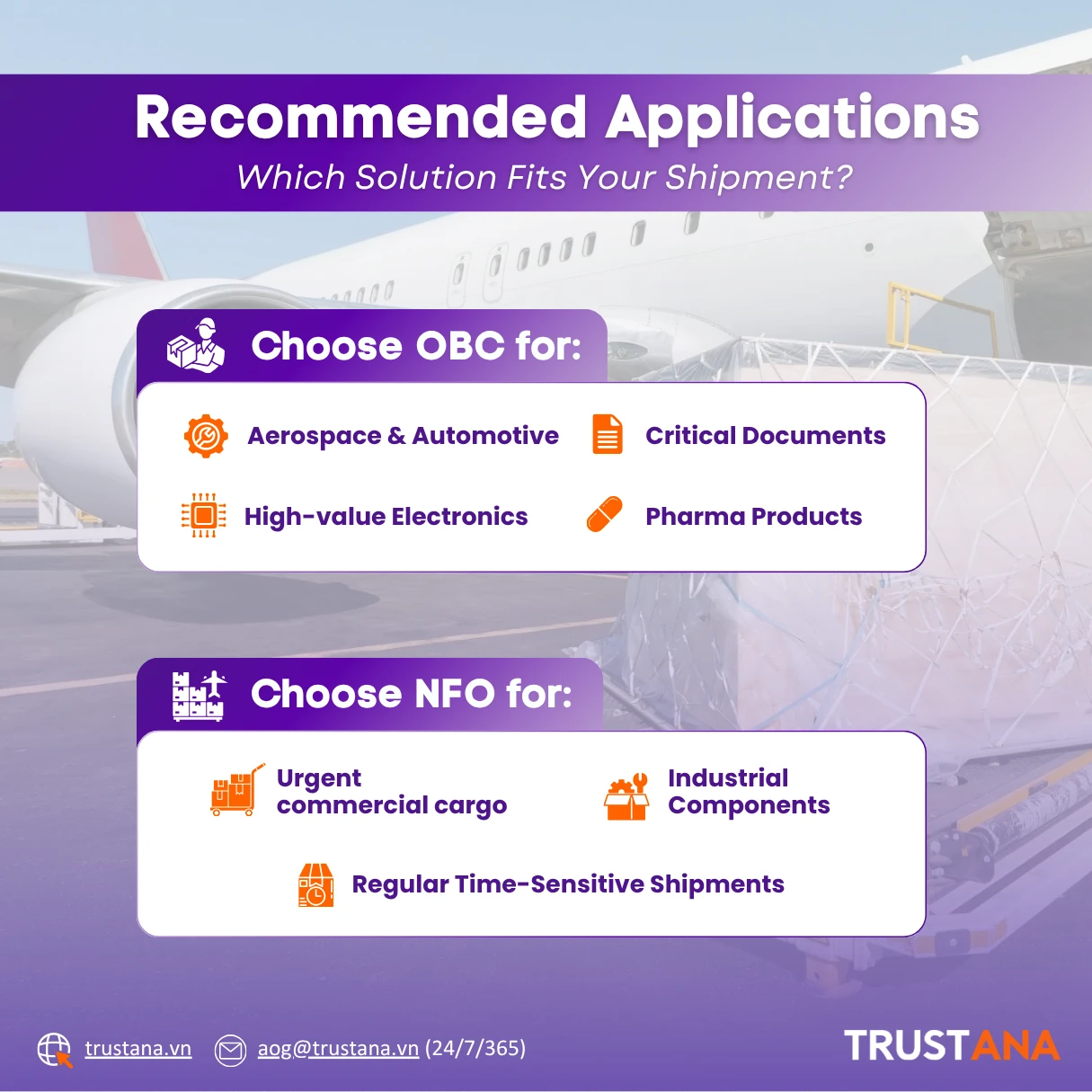
Typical OBC applications include:
- AOG shipments
- Aerospace spare parts
- Clinical trial logistics
- Medical devices
- High-value prototypes
When Should You Choose NFO?
NFO is typically the better option when:
- Fast delivery is required
- Standard cargo handling is acceptable
- Shipment volumes are larger
- Airline cargo capacity is available
Common NFO applications include:
- Urgent commercial cargo
- Industrial components
- Manufacturing materials
- Time-sensitive inventory replenishment
Final Thoughts
Time-Critical Logistics is no longer simply about moving cargo faster.
It is about managing risk, maintaining operational continuity, and ensuring critical shipments arrive exactly when they are needed.
While both OBC and NFO provide rapid transportation solutions, the right choice depends on the operational impact of delay, the required level of visibility, and the degree of control needed throughout the journey.
Businesses that understand these differences can make more informed logistics decisions and reduce the risks associated with urgent shipments.
At Trustana, we support customers worldwide with specialized solutions, including On Board Courier (OBC), Next Flight Out (NFO), Aircraft on Ground (AOG), and other Time-Critical Logistics services.
If your organization regularly handles urgent or mission-critical shipments, contact our team to discuss the most suitable solution for your operational requirements.
--
🇻🇳 Trustana Logistics | mkt@trustana.vn
✈️ 24/7/365 Help Desk: aog@trustana.vn | (+84) 966 814 138

Project
Aerospace Logistics: Why Can a Small Mistake in Aerospace Logistics Cost Millions of Dollars?
Project
Strategic Case Study: The Ho Chi Minh City to Mexico City Time-Critical Logistics Corridor
Project
Next Flight Out from Vietnam to Seattle | Time-Critical Shipment for Aerospace Industry
Project